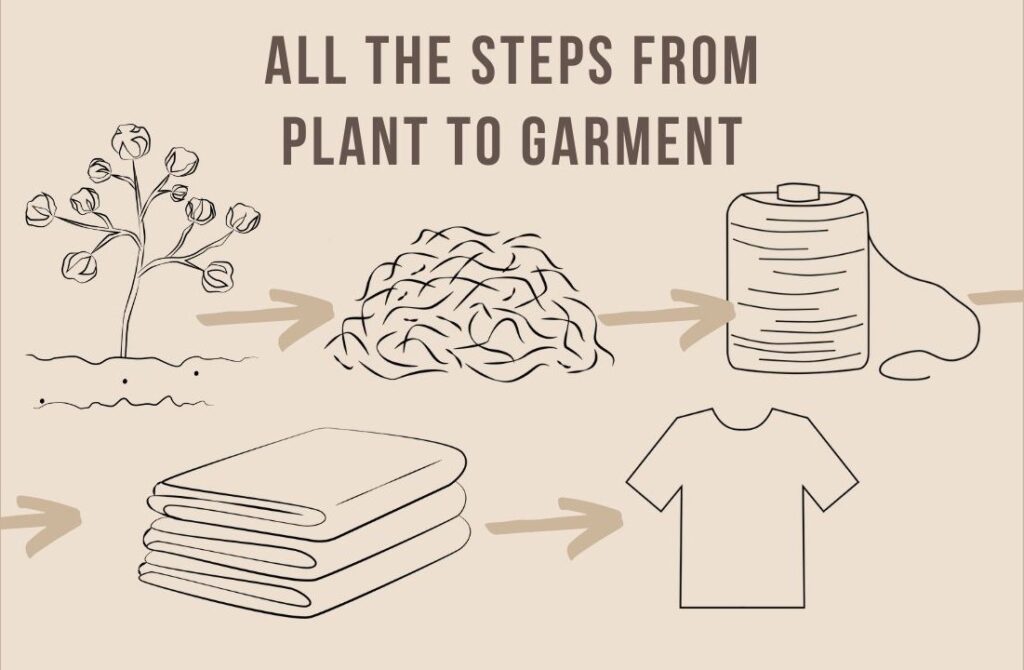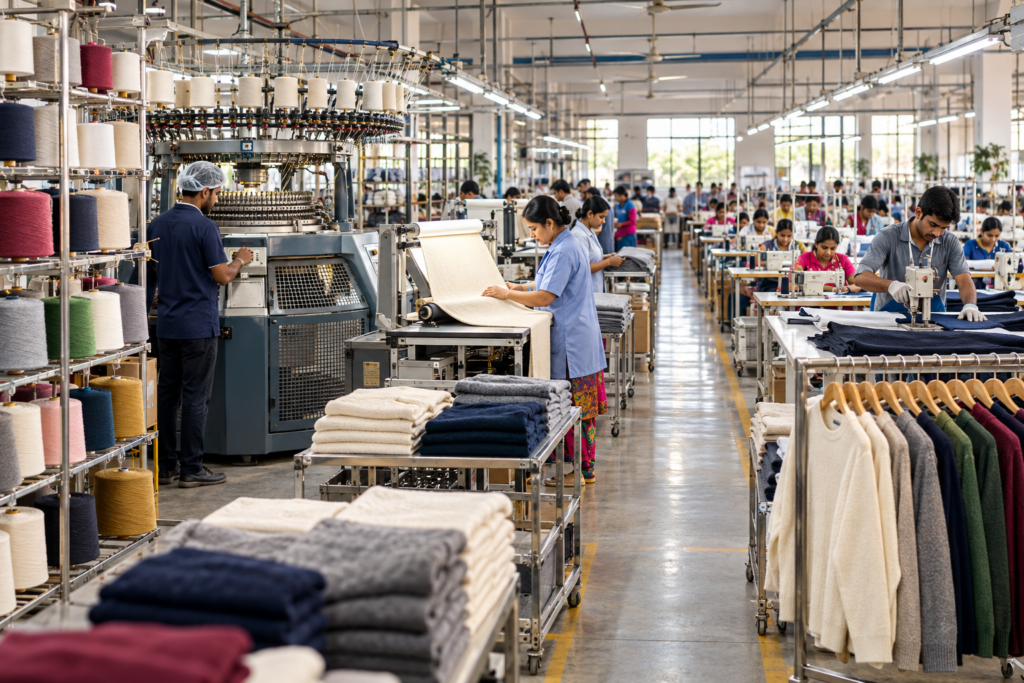

Knit fabric is valued for its looped structure, stretch and comfort. But “cotton knit” or “soft fabric” is not a production-ready specification. For a buyer, repeatable results start with a clear brief that connects the end garment to the yarn, construction, finishing route and tests that matter.
Ludhiana has a long-established knitwear ecosystem spanning knitting, processing and garment making. It is also a material part of India’s export map: provisional FY 2025–26 government data records ₹7,099 crore in textile and readymade-garment exports from the district. That is useful context for buyers looking for an Indian production cluster, while each supplier’s actual capability still needs to be assessed product by product. [Ministry of Textiles / PIB]
From yarn choice to fabric construction
The process begins with yarn selection. Fibre content, yarn count, spinning method and twist influence the hand feel, strength, surface and appearance of the finished fabric. Cotton can suit breathable everyday garments; polyester and other man-made fibres can support specific durability, drying or performance requirements; blends can balance properties. These are design choices, not automatic guarantees. Validate them against intended use, cost, care requirements and applicable buyer standards.
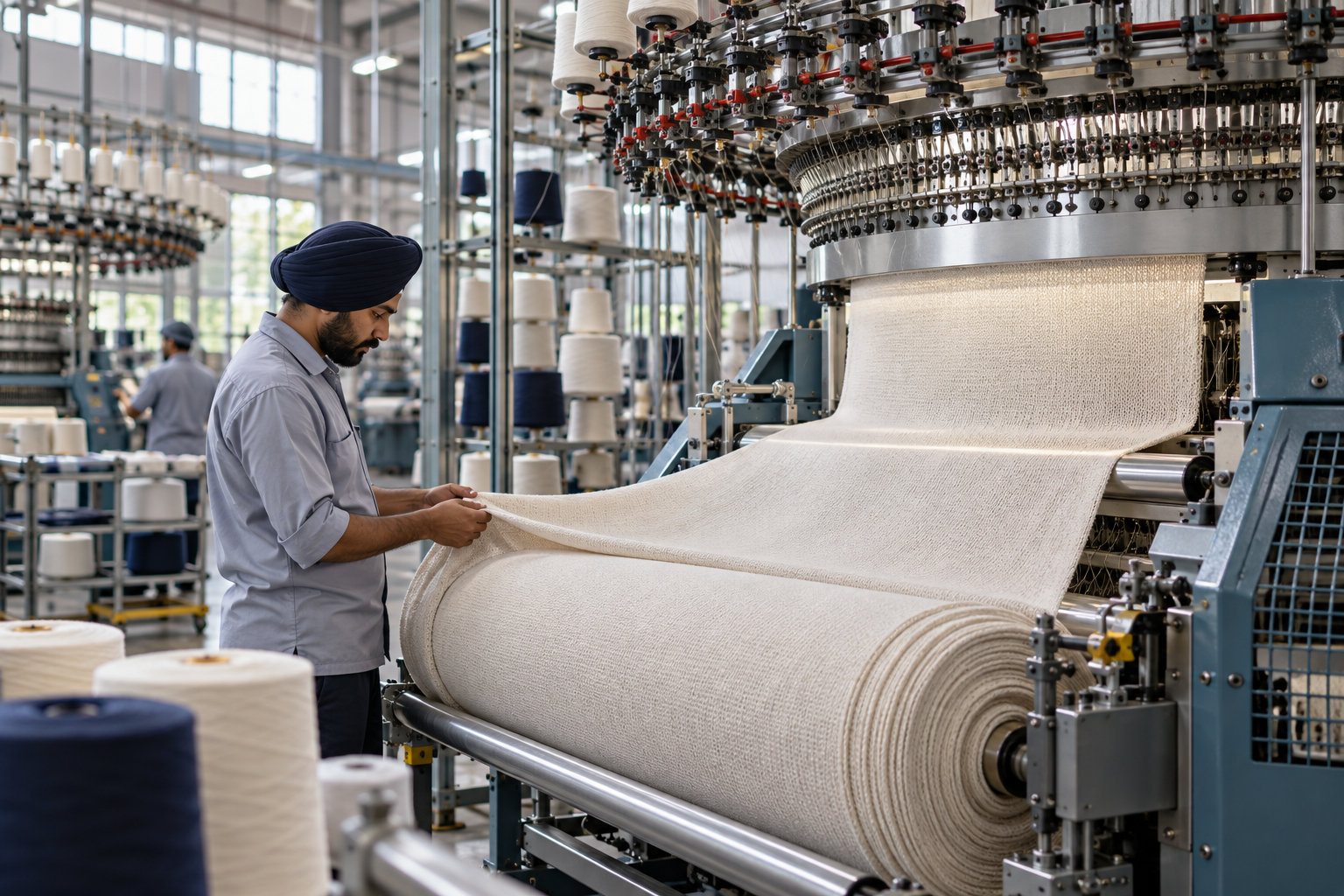
The yarn is fed into knitting machines, where needles form intermeshing loops. Common constructions include single jersey, rib and interlock, each with different stretch, recovery, thickness and appearance. Machine gauge and settings, yarn tension and operator controls influence the result. After knitting, fabric may be relaxed, dyed or printed, washed, compacted or otherwise finished depending on the specification.
The measurements that prevent avoidable surprises
Before bulk production, align on at least these points:
- Composition and construction: fibre percentages and knit structure, including any approved tolerances.
- Weight and usable width: target GSM and finished width, measured by an agreed method.
- Shade and surface: approved lab dip or standard, plus expectations for pilling, slubs and shade variation.
- Dimensional stability: shrinkage and spirality limits after the intended wash or care process.
- Performance tests: select colourfastness, pilling, bursting strength or other tests according to the garment’s end use and buyer requirements.
- Finishing and care: hand feel, finish chemistry where relevant, and care-label assumptions.
The exact test method and acceptance limit should be written into the purchase specification. A sample that looks right on a table may behave differently after cutting, sewing and laundering. Ask for a production-representative sample, test the intended care cycle, and approve a sealed reference before committing to volume.
What is changing in India’s textile landscape?
India’s textile policy is placing emphasis on man-made-fibre fabrics and apparel, technical textiles, integrated manufacturing and sustainability initiatives. These are sector-level signals that may expand the material and investment landscape; they do not mean every knit mill offers every fibre or finish. [Ministry of Textiles / PIB, 27 Mar 2026] [Ministry of Textiles / PIB, 13 Mar 2026]
For buyers, the practical trend is specification discipline: ask suppliers what they can consistently make, request evidence for performance claims, and compare like with like. A reliable fabric partner should be able to discuss construction, finish, sampling and quality controls in plain terms.
At Sarjan Global, buyers can use a clear technical brief to start a conversation about the right knit fabric for their collection.